Hamid strolled into my Civic’s class at the end of the bell as if time was a foreign word. I stopped what I was doing. “Hamid, you’re late again. Really? How are you going to pass this class if you’re never here?” He just shrugged, all 250 pounds of him, his hair mussed, his dirty tee shirt torn and draped over thin jeans with several patches covering past sins.
He looked like an Appalachian mountain man out for a Saturday stroll through the foggy hollows. In reality, Hamid was from Iran. He had arrived in this country a few years ago but still seemed like he was in culture shock. He had a budding beard and an infectious smile. Nothing bothered him too much. He told me again why he was late. “My mother was sick and I had to watch my little brother and then I had to walk all the way to school.” He spoke several Iranian dialects and was clearly quite smart, but he didn’t know sentences needed periods or that time schedules meant something.
“It’s all right, Hamid. I’ll help you catch up,” I said scratching my head.
He smiled. As he sauntered off down the hall climbing some unknown ridge to somewhere I couldn’t see, I hollered at him. “Nice beard, Hamid.”
He just grinned and sashayed off to his Algebra class already thirty minutes late.
As I stood in the pulpit gazing out at the congregation last Sunday, I noticed a strange stirring in the back. It seemed at first as if a quiet wind was blowing through a weeping willow. Wisps of greenery were swaying and dipping just below the pew tops. I rubbed my eyes wondering if this vision was heaven sent or just my imagination. Then a little elbow wiggled followed by the soft footsteps of Revel rounding the corner at the back of the church hoisting a portion of some garlands that decorated the sanctuary for this Hanging of the Greens service.
He was a miniature pied-piper marching forward into a story he was living leading his followers with gusto and frivolity. I couldn’t help but chuckle and imagine what the heavenly hosts thought as they peered over heaven’s banner watching.
From the Pew
The pipes almost hypnotized me. I sat motionless, just staring and feeling a sense of awe. There’s something inspiring about organ pipes. They set a mood, they summon us to a high and lifted place where our hearts can gather and commune with the Divine. It’s not often I get to sit in the back pew, but during an interlude in a recent service, I was there in the back just gazing at the choir loft and listening to the immense, golden pipes breathe.
I have a genuine appreciation for the architecture of our sanctuary. Few churches have these treasures that adorn our worship space. The pipes, the stained glass windows, the arched ceiling–all of these icons of modern worship lead all genuine searchers forward to the throne where those seek truth can commune with God and find respite from a corybantic world.
Farewell
I bid you farewell until next time. If you like this newsletter let me challenge to forward it to a friend so he or she can sign up for this weekly, inspirational missive. Just paste this signup link http://eepurl.com/csTu5T into your email and your friend can click it and subscribe to the newsletter.
(p.s. Follow this link to my website (www.Blaktiepress.com) for more items of interest).
David R. Denny Ph.D.
Pastor of the Drummondtown Baptist Church
Accomack VA.
From the Schoolhouse My Virginia Beach City Public School class was full as usual. There were 36 kids fresh from the weekend with little interest in academia. I stood and listened to their idle conversations that played like spindrift on an ocean beach. Just as I was about to get them quiet and started on the fundamentals of the Legislative Branch, a school guidance teacher knocked on my door. Oh great, I thought, another interruption. Standing beside her was a smallish boy with troubled, battle-hardened eyes. I learned that he was fresh from the inner city of Chicago where he had witnessed the brutal murder of several of his family members. As I listened to the counselor whisper to me a litany of horrors that overshadowed this little 8th grader, I wondered how such cruelties could befall one so young. Eventually, his guardian left, and I ushered the boy to his seat. He was so far behind. I didn’t know where to start. He didn’t know his password. He couldn’t open his computer. He glared at me. And another day of teaching began…
From the Pulpit I preached Sunday on the short text, “For nothing will be impossible with God” (Luke 1:37). I wanted to show you what this looks like in Greek.
There is a certain quiet beauty to the Greek text. It whispers in subtle shades that often get overlooked in the rush of the sermon. Let me slow it down and translate this for you:
When you stand very close to God–right up next to him like he’s your closest friend–every word He speaks to you will not be burdened with hints of impossibility.
I just thought you might like to hear some of the Greek music I hear when I read the Greek of this verse. In other words, all of God’s words to us are possible–never impossible.
From the Pew
After the service two weeks ago, I stepped down from my lofty perch and began talking to Danielle, an older woman who always sits closest to the front. As we talked, she told me something I could hardly believe. She said she used to be a teacher in Virginia Beach and that she had taught for one year in my very school–Lynnhaven Middle School.
“What did you teach?” I asked her a bit nonplussed.
She replied, “I taught Latin.” And that’s when I realized just how small this world really is. Thanks, Danielle. Latina est gaudium.
Farewell until next time:
Don’t forget to listen to the latest sermon in a nutshell at my site:
www.Blaktiepress.com. Just click a blog link on the right (or left) and leave me a message.
Acts 16: 8-10
November 27, 2016
Drummondtown Baptist Church
When was the last time you made a bad decision?
Many years ago, while I was in high school, my mother was so excited. She had decided to dump her old classic 55 Chevy, a car I adored and hoped to inherit so I could drive to school and impress the girls. Mom wanted a new stylish, modern car. She never discussed this decision with me, her only son. She made it on her own. So I came home from high school one day and sitting in the driveway where the beautiful 55 Chevy had been sitting, the one with the silver jet ornament that sat on the hood pointing flamboyantly toward the horizon, sitting in that hallowed spot, where my 55 Chevy sat, the one with the huge metallic bumpers you could see your face in—in that very spot where the car of my dreams once rested sat the new car.
Now you all are good at guessing. So what could replace a classic Chevy? What did replace this classic Chevy?— A Gremlin! But wait. It gets worse. A Chartreuse Gremlin!! There was no jet ornament. No manly metallic bumper. No wide mouthed steel grill that draped the entire front of the car. Just a Gremlin, the ugliest car ever made. I’ve never been the same since that moment. Before that,, I was smooth and suave. After that, I drooled and walked into walls. I still do that. That was a bad decision!
Well in our Biblical story today we are going to watch the great Apostle Paul make a huge decision, one that could easily affect the rest of his life and perhaps history. Let’s hope he thinks clearly and finds his way. As we observe one of the great Christian leaders of the past make a monumental decision, we will try to learn how he did it, how approached it. After all, we all make decisions, good and bad, every day.
There is a bit of history in our text. Paul was an educated and intelligent man so I’m sure he was fully aware of these historical links. For Paul settles in at Troas on the western coast of Turkey. It was here in the year 1250 BC that ancient Troy sported one of the greatest battles ever, The Trojan War. **(And by the way, scholars used to think that this was all hoax, this Trojan war and a city called Troy But then a German archaeologist named Schliemann started digging and found it all to be true).
And just up the coast a little further Alexander the Great faced the Persians at the Granicus River in the year 354 BC. It was at the Granicus, not far from where Paul was struggling with a decision that would change his life, that Alexander made a critical battle decision.
He brought his troops up against the Persian army separated by tGranicuscus River. Alexander’s advisors told him there was no way he could charge into the river, up slippery slopes into the face of the Persians. It would be suicide they said. But young Alexander was bold and foolhardy and brimming with pride. He would have none of this hesitancy. And so he ordered his army to attack, to charge the river. And after a fierce struggle his forces made it up the riverbank and routed the Persian army.
It was his first battle and almost was his last. (He took a huge axe blow from a Persian noble and was stunned. He was about to be finished off when his attacker was killed by another soldier).
Paul too was in a battle of sorts. He had been fighting against the forces of Satan all along the first missionary journey. At town after town (Antioch, Iconium, Lystsra, and Derbe) he had planted small churches and won people to the Lord.
Now, as we begin Acts 16, Paul returned to these churches and then wanted to launch off into a second more extensive missionary journey. He had been traveling as an emissary of the home church in Jerusalem. He was delivering the decrees of the apostles and elders of the Jersualem church. His work was vital. He had to make good decisions. He couldn’t go everywhere. But where? Well, he would just have to trust God to lead him, to give him guidance, to supply his needs just as you do each day. This is where out text touches us. WE all have to make decisions every day. Small and large So how did Paul do it?
*Many years ago I remember making a critical decision at a VBS. On one particular night when I wandered into the science lab, the kids were mixing up pudding from scratch. That’s when the teachers grabbed me and told me of the pudding emergency. “We’re out of pudding,” they said to me their voices quivering with fear. You’ve got to go the store and get some pudding. You’ve only 15 minutes before our biggest class comes in. Now go. Take these boxes and get some pudding. Don’t come back without it!
It’s the first pudding emergency I’ve ever faced so I was really psyched up about it. I had a lot of decisions to make quickly and I needed divine guidance. And so I raced down the church hall, out into the parking lot, spun my wheels getting out and charged full speed ahead to Farm Fresh. When I got in the store, I got on the microphone at the store and ordered everyone out. “I am having a pudding emergency,” I screamed, “and I need to focus.” (Well, that part that didn’t happen). But I did find the pudding, raced back and the kids were all there waiting and soon the pudding machinery was whizzing again.
Now I know this pudding crisis might seem silly in comparison to the monumental historical events of ancient Troas where Paul was waiting for guidance, but in reality all of the little dots along your life journey are important to God. He wants to be in your greatest moments and in your pudilng emergencies too. God wants to guide your life and lead you gently forward like a shepherd leads his sheep.
And in our text, Paul seemed lost for a little while. He was brimming with spiritual fervor and he wanted to save the world. But where should he go? He was confused. He thought it over for some time and then decided he would go through Asia toward Ephesus. But God said no!
That was puzzling. So he thought to himself, alright I’ll go north up to Bithynia on the Black Sea. But we read in Acts 16: 7 “that the Spirit of Jesus did not permit them.” I can just see the apostle bumping into closed doors and getting frustrated. He wants to find the right way, but that way is hidden from him.
And doesn’t this happen to you from time to time? Should you take this job or that one? Should you join this team or that one? Should you send your child to this school or that one? Just how do we find and follow God’s will when can’t see the way clearly?
Now here are a few simple strategies I gleaned from studying Paul’s journey. Maybe they will help you and me discern God’s will for our lives.
There is a time to wait for an answer. When Paul arrived at Troas, he didn’t know where to go. And so he checked into a hotel, put his bags in the corner and stood out on the veranda staring off at the blue Agean Sea and wondering. And still befuddled after sunset, he did what we have to do sometimes. He waited on the Lord. He just laid down on the hotel bed, said his prayer for guidance and trust, and then went to sleep. He waited.
*Here is a valuable text from the Psamist on this very subject. Ps 27:14. “Wait for the Lord. Be strong and let your heart take courage; yes, wait for the Lord.
But silence can be frustrating. When we don’t hear anything from God we often think He doesn’t care about our problems. But God knows and God cares. And why can’t we see silence as a form of communication. The worst thing we can do is panic and head off boldly in the wrong direction.
*Who remembers Robert Frost? When I taught English I had my students memorize the poem The Road Not Taken.
Two roads diverged in a yellow wood–
and sorry I could not travel both
and be one traveler, long I stood
And looked down one as far as I could
to where it bent in the undergrowth,
then took the other, as just as fair,
and having perhaps the better claim
because it was grassy and wanted wear,
though as for that the passing there
had worn them really about the same…..And both that morning…
When Robert Frost was 20, he was penniless and out of work. His little book of poetry had been rejected by publishers, he was expelled from Dartmouth College, and his girlfriend Elinor White had dumped him. So he took a train down to Norfolk, and found the Dismal Swamp and at night walked for ten miles into the swamp. He tells about this in his poem Kitty Hawk, writen when he 80. (If he hadn’t accidentally come across a band of duck hunters, he might have never surfaced). This juant into the swamp was a bad decision. I think he just got tired of waiting–waiting for guidance and clarity.
Paul could have easily have said to himself and his entourage, “I’m not hearing anything clear from the Lord and I can’t wait around anymore. So let’s go. Let head on down to Ephesus.” But had he done that he would have missed a critical rendevous with Lydia the seller of purple fabrics standing at a small stream outside Philippi. Because he waited for the Lord, he was told to go Macedonia and there he met Lydia and won her to the Lord.
And that lead into the next lesson on guidance: Listen. Learn to listen and discern the voice of the Spirit.
Paul went to bed that night unsure about the future about the direction he should go. But a dream came to him. And in the dream a Macedonian was standing and appealing to him. But how did Paul know that was from God? In 1 John 4:1 the early
Christians had to learn how to listen and discern the voice of God. For there were many voices in the air.
1 John 4:1 Beloved, do not believe every spirit, but test the spirits to see whether they are from God; because many false prophets have gone out into the world.”
Today’s children hear so many voices. They have to learn to listen and discern. There are voices telling them to rebel, to try drugs, to join a gang, to get into trouble, to steal from a store, hate their parents. And that is why church is so important to children. Many of my public school students are heavily involved in their churches. One of my little girls wants to come and play her violin for you all so bad. I told to come. But it’s a long way. But church involvement lets them hear the voices of joy and hope and salvation. Let’s pray that our church will grow with many new children coming over the next years.
And the saint also has to learn how to listen and discern whether the voice in the night is from God or from the world. This takes prayer and intense communication with God. Paul heard the cry of the Macedonian and determined in his heart that this voice was genuine. He waited—He listened—And he went forth. And that leads us to the final thought.
And the final thing Paul was did was to act without delay. Once he knew the
will of God he acted. The Greek text says he IMMEDIATELY, eftheos, WE SOUGHT TO GO INTO MACEDONIA.
A good decision isn’t any good if you ignore it. When God speaks to you, act upon that decision. Paul did. And a whole new missionary field opened before him as he went west toward Athens, and then Corinth.
Conclusion: And so how do we discover God’s will and guidance?
Wait—Listen—Act. That was Paul’s prescription for making a good decision and finding God’s will. You can do the same thing daily as you seek to follow the Lord.
Unleashing Everything 1 Thess. 5:18
November 20, 2016
There’s nothing worse than being unprepared for unexpected events. This is what our text is teaching us all this morning.
–You’re walking your dog in the park. The sun is out. Your Irish setter is smiling. The mockingbirds are quoting Shakespeare. The black swans on the lake are fluffing their feathers. It’s a perfect day. What could go wrong? And then you hear it. A crackle of thunder. And within seconds it’s pouring and your new Paris jacket is sopping wet.
You were unprepared for an unexpected event.
Now what I want to do this morning is to prepare you for the unexpected.
For example, you never know when a Greek tourist might stop you on the streets of Onancock and greet you and then hand you an apple. He’ll say (in his greeting) “Kalimera sas.” Good morning.– And then he will hand you an apple and then will he wait for a polite response. And this is where you want to be prepared. I’m going to tell you how to respond. Just say “sas efkaristo, (εὐχαριστεῖτε)” Thank you.
So now let’s try it. I’ll be the little short Greek guy who gives you the apple. And I’ll say “Kalimera sas.” And you’ll say, —-sas efkaristo.”
————–
Now I know that you probably think I’m of my rocker this morning talking about Greek tourists and apples and greetings etc. Bur text this morning uses this very word–thank you. Paul says in the Greek text, “In everything —say—sas efkaristo. For this is the will of God in Christ Jesus for you.
In other words, it’s God’s will for you to say THANK YOU–sas efkaristo–to everything that comes your way. EVERYTHING.
Not just the blessings of life.
Not just the joys of life,
but to the difficulties, and the sorrows and the unexpected tragedies that we don’t understand. It is the will of God for you to say every day, every hour, every moment–sas efkaristo.
For when we give thanks for the good and the bad of life then we are one with God’s will for our lives.
—————
Helen Keller was born on June 27, 1880 in Tuscumbia , Alabama. When she was 19 months old, she contracted scarlet fever and soon lost her sight and her hearing. During her early years Helen Keller became wild and unruly. She would kick and scream. People told their parents to place in her in an institution. But instead they hired a young 20-year old teacher named Anne Sullivan to work with her. But the results were much the same until one day the unexpected happened.
Sullivan took Helen out to the water pump. She spelled out the word WATER. The she began pumping the water and as it rushed from the spout over Helen’s hand, Anne once again spelled out the word into her hand. That’s when everything changed. Helen figured it all out. So excited, she stomped the ground and demanded another word. And another. And another until by nightfall she had learned 30 words.
Helen Keller’s life demonstrates our text. For instead of living her life seething with anger over her disability, she instead spent each day giving thanks for it. In 1980 Jimmy Carter declared June 27, as a Helen Keller Day at the federal level.
_______________________
The title of my sermon is unleashing EVERYTHING. This is how our text begins. In everything…
Upon first reflection, I want to stop Paul mid sentence and protest. I think the conversation would go something like this:
Paul: In everything say sas efkaristo…thank you…
Me: Wait a minute brother Paul. Just stop right there. I mean that is not practical. Real people aren’t wired to give thanks all the time. You’re not living in the real world.
Paul: But David, that is God’s will for you. Don’t you want to follow’s God’s guidance for your life?
Me: I do but God knows I can’t give thanks all the time for everything. If I fall down in the street and hurt my leg I’m not going to jump up and say sas efkaristo. Not gonna happen.
Paul: Look, David. I’ve got a suggestion. Why don’t you start with small things. Give thanks for the food you eat. How about that?
Me: Well, I could do that.
Paul: And Give thanks for your family.
Me: Well, I can do that.
Paul: And before long you’ll find it natural and beneficial to give thanks when you fall in the street. And remember, that giving thanks in EVERYTHING is your goal. It is what God wants you to do.
—————
Daniel would never have stopped and argued with Paul like did. In Daniel chapter 6 we the most incredible example of giving thanks in the midst of a horrible personal dilemma. Daniel had just been promoted by Darius the Mede to the top management position in the land. Daniel was happy to give thanks in everything. and 3 times a day he stopped working and went home to his prayer chamber on the roof of his house. He always opened the window that looked toward Jerusalem and then he kneeled down and he gave thanks for his great good fortune.
Those who were jealous of his new power devised a plot to bring him down. They had the king sign a law than no one could pray to another God. But Daniel was undeterred.
Read Daniel 6:10———
What incredible courage! Knowing that the new law prohibited him to pray to his God, he defied this order and went to his prayer room at noon and gave thanks anyway. Knowing what would happen to him, he still gave thanks.
————–
Sometimes I’m a skeptic. I don’t always believe everything something tells me. So I found myself wondering if Paul really practiced this strange way of living–giving thanks for everything. So I opened the Bible and the pages parted at this text which I will read to you. (1 Corinthians 12:7-10).
Paul says in this Corinthians passage that he has seen things in a vision that were so glorious that words could not express them. And to keep him humble, God forced a thorn into his life. —Read (vs. 7-10).
When I heard Paul giving thanks for the thorn I knew that it was real for him and it could and should be real for us as well.
Conclusion:
*I used to walk my Irish setter Reverend early in the morning when I lived in Cheriton. I would leash him as I walked across 13 in the early morning fog. But when I hit the farmer’s field and was heading toward the Bay, I unleashed him and let him run. He would leap and bark with excitement. And would run after him. It was one of those man/dog moments.
I want all of us to learn to unleash EVERYTHING.
“In everything give thanks for this is the will of God in Christ Jesus for you.”
I want all of us to learn to say sas efkaristo through the good and bad in life. For then and only then will we truly be in sync with God and find the deepest meaning of happiness in our lives.
He was midnight’s child, born to lose. When Ichabod breathed his first, he breathed his last. His first cry was a plea for help which went unheard by a mother who cursed him on her birthing bed and quit on life (1 Samuel 4:20).
Color him black.
Ichabod had no chance. His father had just been killed in a losing battle against the Philistines. All the better! His dad had been a loser all his life anyway.
Color him black.
He was midnight’s child. When Ichabod was born, God lowered heaven’s flag to half mast and all the heavenly hosts mourned. The pitter, patter of little cherubim feet on the merry streets of gold was hushed. The flitter, flutter of angel wings on busy assignments were silenced. Halos hung heavily from the melancholy hands of heaven’s now solemn attendants.
Poor Ichabod. He had no grandfather. Poor man died the day of his grandson’s birth. Poor Ichabod. He had no father. He too died the day of his son’s birth. Poor Icabod. He had no mother. She died in labor when she heard the dreary news of family deaths. Poor Ichabod. He had no country. It died the day the Ark of the covenant was taken as booty by the Philistines–the same day of his birth.
Ichabod was an orphan’s orphan. No one sang him morning lullabies. No one baked him birthday cookies. No one bragged on Ichabod’s first tooth. No one taught him to say “Daddy.”
Color him black. He was midnight’s child. Ichabod wept in a world that ignored him.
What about you? Has misfortune struck you recently? If so, remember Ichabod. Are you on the verge of tears? Remember Ichabod. Is your smile forced as you labor in a stressful job? Remember Ichabod. Are your burdens heavy? Remember Ichabod.
And consider this: The Ichabod’s in life always catch God’s eye first. God looks first for the little lost lambs. God cradles the fallen sparrows most tenderly.
1 Samuel 17: 41-51 (Ephesians 6:10-13)
Dr. David R. Denny
November 13, 2016
Robert Wadlow at age 22. He was born in 1918 and stood 8″11″.
I was on my stomach this summer crawling through my garden. I was on a mission to pull weeds and I was determined to track each blade of crabgrass, every nefarious dandelion and bindweed and chickweed that I could find. Don’t you just love gardening? What could be better than crawling around in your garden on a pretty spring morning getting dirty and having a ball? Well as I was going about my weeding, I spotted something amazing that illuminated my sermon title for this morning–Mission Impossible”. I saw something impossible right in front of me. So, what did I see? I saw an ant carrying a huge leaf in his jaw.
Now just in case you missed this lesson in Science class, let me remind you of a few ant facts: Ants weigh about 1-5 milligrams. Doesn’t sound like much but the combined weight of all the ants on Earth is greater than that of all the people! Now here is the kicker. Ants can carry loads up to 20 times larger than themselves.
Now this part of the sermon requires a little math so I don’t want you to panic or anything. Just multiply your weight by 20. Now this would be a good time to cheat on your weight if you want to. I weigh about 220 so times 20 would be about 4,400 pounds. To put it another way, this would be like a 150-pound person carrying around a compact car! And an ant’s neck joint can withstand a pressure that is 5,000 times that of his weight.
And so when I stopped pulling weeds long enough to admire the little ant carrying this huge leaf I realized that the impossible often happens in daily life.
————————————————————————————–
Our lives are often dotted with Mission Impossible moments.
Sarah laughed uncontrollably in God’s face when He said that she would have a child at age 90. Mission Impossible. But she did have a child–Isaac.
The Red Sea was a MissionImpossible Momentfor Moses. But as the Egyptian chariots came charging across the desert, he stretched out his staff and split the sea.
And in our text today we see a young shepherd boy faced with something so improbable, so unlikely that had this event occurred today the Las Vegas bookies would have downgraded him to a thousand to one odds of killing Goliath and another Mission Impossible flits across the pages of Scripture.
As we look briefly at David’s story of courage and faith, I want you to look within yourself and ask yourself this question—what impossible challenge am I facing in my life right now? Have I lost my job? Is my marriage in trouble? Is my health failing? Have I got a huge test to take that might determine my future? Is there a big interview looming next week that might make or break my future?
And what about our church? Are there impossible goals we might want to set here? If an ant can do the impossible, can we with God’s help see our church grow? Impossible obstacles in your life and in our church can be overcome with absolute faith in God.
Goliath was huge. He was a human wrecking ball. He was simply undefeatable. (READ 17:4)—The Scripture says Goliath was 6 cubits and a span. A cubit was the tip of middle finger to elbow (1 1/2 feet) and a SPAN was thumb to little finger (9 inches)–we can get Goliath to 9 – 10 feet.
***Now just a quick textual note here. If you ever get to Israel and happen to stroll over to the location of the Dead Sea caves –13 miles East of Jerusalem–where the ancient Dead Sea scrolls were found make sure you look up at cave four. (MSS were found in 11 caves) It is the easiest cave to see from a distance and it is the cave where most of the scrolls were found. In this cave 4 the oldest Hebrew manuscripts for Samuel was found and in one it says that Goliath was 4 cubits. But the other manuscripts say 6 cubits and a span. Here is what happened. (Now you’ll have to step into my Hebrew class at the NOBTS)– The Hebrew number for 4 (4 cubits) is this: (MAKE HAND MOTION) The Hebrew number for 6 (6 cubits) is this——And so eventually 6 cubits became the standard translation which is 9 feet.
The tallest man in recorded modern history was Robert Wadlow who at age 22 was 8’ 11.1 inches. His father standing next to him barely reaches his waist.
Goliath was huge. 10 feet tall and all man and all muscle. He wore a scale armor that weighed 150 lbs. He had a huge bronze helmet and heavy bronze shin guard. Altogether his entire panoply of armor weighed in at 272 pounds. Plutarch tells us that the ordinary Greek soldier carried about 60 pounds.
Every morning and every evening Goliath came out into the valley of Elah and
shouted across to the Israelites to send him a challenger. He shouted this intimidating challenge for forty days straight. And for forty days straight no one dared to answer. The entire Israelite army quivered in fear and refused to see any possibility of success.
Now my observations in modern life place a large number of us in this valley of fear and paralysis. We see an obstacle before us in our lives but we can’t face it, or answer it or overcome it.
Why are the bars filled each night? It is an escape from the burdens of life, from obstacles people can’t deal with.
Why are we as a country consuming tons of drugs each year?
Why do over 20 million Americans suffer from depression?
I think most of us hit walls along our journey and we see no way over or around and we give up.
The entire army of Saul was locked in fright as they stared down upon this giant shouting curses at them.
Oh, where is the angel Gabriel when you need him. Don’t you remember what Gabriel to said to Mary as she trembled before an impossible challenge? He reached out to her, raised her face, gently looked into her eyes and said these immortal words; WITH GOD, NOTHING IS IMPOSSIBLE (Luke 1:37) Nothing! Nothing! No manuscript confusion here. No number 4/6 doubts here. Simple and straightforward. Straight from the lips of an angel who came straight from the throne of God—WITH GOD NOTHING IS IMPOSSIBLE.
Oh, if only Gabriel had fluttered down to the valley of Elah and touched the hearts of the quivering soldiers. I want each of you here this morning, whoever is at a mission impossible point, to hear the echo of Gabriel’s word. With God, nothing is impossible. God can and will help you through your problems. He hears. He understands. He is here for you.
I admire David so much. He heard the giant cursing and bellowing in the valley. He was instantly repulsed. The soldiers ushered him to Saul. “Here is a challenger,” they said. Saul, tall in his own right, looked down upon the little wisp of a kid, thin tanned arms, flowing hair, easy smile, determined eyes. “Are you sure? He asked.” “Yes, I’m sure. God helped me slay a lion and a bear. What’s the difference?”
Saul loads him down with his heavy armor but David tosses it aside. “It is untested,” he says. And then David goes to the brook, selects five smooth stones, gathers up his sling and heads off to do battle with an impossible challenge.
We have to pause here and study David’s example. Facing an impossible challenge, he doesn’t panic or retreat. He remembers the victories God gave him in the past. He remembers and he draws confidence from them. You can do the same thing. Surely you too have some victory in your past. Maybe with God’s help, a relationship was repaired, or a deadline met or a job found or an addiction resolved. David remembered his past victories. They invigorated his faith in God. He did it in the past. He can do it now.
Now I want you to notice that David selected his weaponry with great care. He walked purposefully toward the small brook Elah. You can still see it today. It is about 10 feet wide and still filled with small stones. David selected 5. Each carefully examined. Some tossed back into the brook. The best five, the smoothest ones with the right weight and dimensions were carefully tucked into his pouch.
We too are taught by the Apostle Paul to select our weapons carefully. Victory can only be assured as you march against your impossible mission if you gather the right weapons. That list is documented in Ephesians 6 beginning with verse 10. Let’s gather some and tuck them into our shepherd’s pouch.
Gird up your loins with TRUTH
the Breastplate of RIGHTEOUSNESS
THE GOSPEL OF PEACE
the shield of FAITH
The helmet of SALVATION
SWORD OF THE SPIRIT
David, with his pouch filled with the hand-selected stones, raced toward the giant, whirled his sling round and round and flung the first stone right between the eyes. Goliath fell with a thud and the impossible was accomplished!
Conclusion:
Well, history is replete with mission impossible stories. Hannibal shocked the Roman world as he prodded his African elephants over the Pyrenees and down the Alps entering the heart of Roman territory with a vengeance.
Alexander the Great conquered the world by age 33.
But nothing was greater than this victory by the humble shepherd over the mighty Goliath.
And your victory against some impossible obstacle in your life can be achieved as well. and many victories I predict are on the horizon for Drummondtown if we will just take heart, join hands with David the Shepherd boy and Gabriel the angel and believe in the impossible.
Just hear the voice of Gabriel—WITH GOD NOTHING IS IMPOSSIBLE.
Remember thoughtfully the victories God has given you in the past.
Then select your weapons carefully and launch out to conquer the giant.
This morning Paul orders every one of you here in the Greek stadium to approach the starting line. (I say ORDER because the Greek word in verse 27 is a strong imperative–RUN!) τρέχετε …You’re all expected to compete. There are no exceptions. The Greek text says clearly PANTES—everyone runs. Paul not only expects you all to run, he expects you to compete at the highest level. For that was absolutely the Greek standard. You trained for months, watched your diet, abstained from all practices that would lessen your effectiveness. You came to Olympia ready to win.
Now I have a few simple questions that any spectator would want to ask as they watch you line up: These are yes/ no questions. (Index finger wiggle means yes--little finger wiggle means no. Everybody practice first. Hands low so nobody can see).
Are you in top shape?
Do you plan to win? Do you have a place on your wall to mount the winning wreath? (Run that you may win the wreath).
Did you write your acceptance speech in advance? **In ancient Greece, the winner of the race was honored. He was allowed to erect a statue in his hometown and to write an account of his victory.
All right. Now total up your answers. If you wiggled all yesses then you’re a model for all us. Would all my yes people please stand?—Hmm. It looks like we’re all candidates for improvement. Understand one thing though—PAUL ANSWERED YES TO ALL OF THEM. He makes it clear in this provocative text that he is highly serious about his calling, his conditioning, his zeal and determination to win at any cost.
**The Air Force used to have an exercise plan called the 5 BX. It used 5 basic exercises to get fit. It is no longer used today but in my dad’s era it was big. You only had 11 minutes to finish them all. You started simply by doing some stretching. Then you did your situps, then some awful back extension by lying on your stomach and rocking up and down. I hated those. Then came the push ups and finally the running in place. No cheating here. You had to get your knees high. –When I was in high school and playing basketball, I used to try to do them all.
Our text today is Paul’s 5BX. It is a call to action, a call to evaluate your spiritual calling and goals. Accordlng to Paul, every Christian is to be in the winner’s circle. There’s no joking around with Paul. He’s intense. He means business.
*My high school BB coach was just like this. He was a short stumpy Methodist man who made it clear on the first day of practice that by golly—(he used other words)—we had by golly—(other words)—win all our games. If we didn’t by golly (other words)—he would by golly–get us by golly–good.
One game at half time we were losing. We were all sitting in the locker room wondering where the coach was. Then suddenly the coach entered kicking the door open with his foot. He stomped right over to some folding chairs near us and began throwing them all across the room. We were dodging chairs and saying prayers at the same time. That’s intensity–That’s Paul in our text.
I remember after the season was over, a scheme developed in my mind about the coach. I was gong to go into his office and confront him! —It took a long time for me to get the my nerve up but the day came when I did it! I marched right in there and looked him in the eye and I asked him point blank–Coach–are you saved?– I was into soul winning then. It was the hardest thing I ever did. He looked at me like I was a Martian. I expected chairs to start flying at any second. Then he started laughing uncontrollably. When he was finished, he wiped his eyes and looked at me and said, “Of course I’m saved. I’m a Methodist. Now BY GOLLY –git out of here.”
Paul expects everyone of you (especially if you’re a Cub’s fan) to be in the winner’s circle. So I want you step into that circle for a minute and let’s see what it feels like. Let’s examine the items in this haloed space. They come right out of the text.
Glance at your text one more time and see if you can identify three essentials for winning. What are they? If you have a pen, write them down or just remember them.
Runner’s shoes. The first thing I see in the winner’s circle is a pair of worn out running shoes. **I was looking at an ancient statue of Hermes, dated 350 BC. He is the inventor of foot races. He sits in a reflective position fit and resting. On his feet are winged sandals, just little wisps of leather that barely cover his feet.
In the Christian life, every believer is a runner. Every winner’s circle has a pair of running shoes. For the believer, running is the symbol for our spiritual lives. Running implies spiritual fitness, dedication, discipline and purpose. You can’t be a serious runner without these qualities.
*Just before I left school on Friday, I slipped into the gym whre the coach had a class still going. About 6o kids, half girls, half boys. He barked orders and they obeyed. “Boys, sit! Girls run.”–And the boys sat without talking and the girls ran. He blew his whistle. “Girls, sit! Boys, run!” And they sat and they ran. Then he blew his whistle. “Everybody come to the center of the gym and sit. No talking.” And they did. Then he got after them a little. “Some of you wren’t really giving it your all. This leads to bad health. And that leads to heart attacks.” etc etc..
There’s the attitude Paul is looking for in each you. He wants to see that intense determination to achieve the spiritual goals God has for your life. He wants to see you lacing up your running shoes each morning, heading out to the track, striding toward the finish line with full intentions of winning the race.
**running in Dephi stadium—
Boxing gloves. Step into Paul’s winner’s circle and you see his boxing gloves. They’re blood spattered, and sweat stained. Once again they represent his life, his approach to the goals God set before him, his obedience to the calling God gave to him. Paul shows us his gloves. Can you show Paul your gloves?
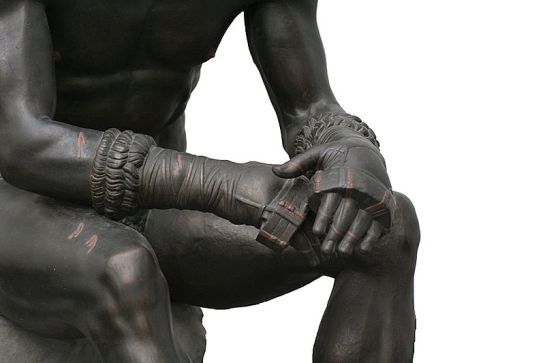
In the ancient world, boxing was a huge sport. It has a history that stretches back hundreds of years before Christ. In the original boxing matches two men would sit facing each and would beat each other with their fists until one of them was killed. —- But in later times boxers wore a form of gloves. They were called HIMANTES These were thongs of ox-hide about 3-4 yards long that were wrapped around the hands and knuckles. The fingers were kept free. —There is a beautiful ancient bronze sculpture of a boxer sitting with his hands on his knees waiting for the match to begin. You can see the ox hide wrapped around his hands.
The rules of ancient boxing were simple: No finger gouging. No rings. No time limits. No weight classes. You were paired with an opponent by chance. You fought until you died or gave up by lifting a single finger.
Now let’s watch the great apostle Paul prepare for a bout. He strips down as was the Greek method. He wraps his hands carefully, methodically with the himantes—the leather strips. He faces the opponent. WHO WAS THE OPPONENT? HIMSELF!!
Paul fights himself. He says I buffet my body. hypōpiázō (/hypó, “under” and ōps, “eye”) – properly, to strike under the eye, i.e. giving someone “a black eye.”
This word is only used twice in the NT. It means to hit myself just below the eye. The Greek word for that very spot is OPS. It is the boxer’s favorite target.
Most of Paul’s battles in his Christian life were with himself. Isn’t that true for all of us? We might have our occasional battles with the world about us or someone in particular but our biggest enemy is usually ourselves. (doulagōgéō (from /doúlos, “bond-slave” and /ágō, “to lead, bring along”) – properly, to lead as a captive.)
**I’m not a great golfer but I follow the sport a little. And of course you can’t help but make a reference to Tiger. He wasn’t defeated by his opponents on the course. He lost to himself. Paul said, that he was not going to let that happen to him. So each day he boxed himself to knock out the enemy within. His biggest fear was that somehow he might find himself one day disqualified. (counterfeit coins) (ἀδόκιμος, (δόκιμος) (from Euripides down), not standing the test, not approved; properly of metals and coin,…).
In the ancient games if someone cheated, the judges would come down and whip them publicly, fine them and then disqualify them. Paul feared that. And so when you step into Paul’s winner’s circle you see his shoes that represent his daily striving for the crown of victory and you see his gloves that he used for self-discipline).
Wreath.
Now what’s the last thing you see in the winner’s circle? It is the prize—the imperishable wreath, the trophy for winning, for being the best. Paul says, when you run, run toward to the crown. When you box, box to win the crown. (9:24—τὸβραβεῖον;Only used twice–Means “umpire” or the arbiter of a sporting event. Then it came to mean “prize.” στέφανον
Paul kept this symbol of the prize before him at all times. Please take a moment to find a text. Look up Philippians 3:14. I press on toward the goal for the prize τὸβραβεῖον; of the UPWARD CALL OF GOD IN CHRIST JESUS.
The boxers and runners and javelin throwers and wrestlers and discus athletes all gave each contest their very best. They ran and boxed to win the wreath. But of course the olive wreath didn’t last long. The glory of the wreath was short lived. It was a treasure that faded away with time, like day lilies and roses in the fall air.
*A few years ago, a humble British laborer was out doing what he had done for 18 years. He had a bulky metal detector in his hand and he was walking over his field. His friends always mocked him because all he had ever found was a little scrap metal. Nothing more. But on this day as he unpacked his gear he repeated his little good luck mantra before he started: “Spirits of yesterday, take me where the gold is.”
That day he made one of the most important archaeological finds in British history. First he pulled one golden artifact out of the ground and then another and another. Before he was done he had filled box after box with 7th century Anglo-Saxon treasure worth millions today.
It is the ultimate prize for a treasure hunter. But as great as this is, you won’t find anything like it in Pauls’ winner’s circle. The only treasure you’ll see there is the imperishable wreath, the never tarnished UPWARD CALL OF GOD.
What motivates you today? Is it a higher salary, a bigger house, a faster car? What get your blood pumping? Is it a big stock day, a huge promotion at work? Those things might have their place in the modern world but the Christian is to focus a different reality. We are to always be standing on our toes looking past these temporary wreaths toward the glories of heaven.
Conclusion:
All right. What’s in the winner’s circle?
We have the runner’s shoes,
the boxer’s gloves
and the imperishable wreath.
I hope as you go about your duties this week you will repeat these three items to yourself. Visualize them in your mind. Let them guide you and motivate you to strive to the highest level for Christ.
I’ve got a simple question for you this morning. What is the best thing you’ve ever found on the beach? Finding things buried in the sand is one of the great simple pleasures of walking on the beach. The waves tumble in and stir up lots of little creatures that scurry about and bolt for cover. Sometimes you might see a crab snapping his claws as he backs away slowly. Or a big dead fish some fisherman tossed over board. And of course there are all those delicate shells that glisten with a captivating iridescence when you hold them up to the sun.
**For six years I served a church on the Eastern Shore. One of my favorite past times was to walk the beaches on the Bay with Alice and my Irish Setter. (I hesitate to tell his name but I guess I’ll come clean. I named him Reverend since I never liked to be called reverend). There was a secret spot near the Bay Bridge Tunnel where I used to go. Mr. Boze Kellam, one of my members, had a potato farm that stretched to some huge bluffs that overlooked the Bay. One day he took me on a ride through the fields in his old pickup down to the bluffs and showed me a secret path through some woods that led down a narrow trail to the beach. I used to go there. (I’m going to break with church protocol and show you the picture I took myself of this magical spot).***************
I walked beneath a chimerical canopy of interlocking tree branches breathing the salt air that hung heavily in the trees. The trail was speckled with sunlight and the mood was surreal and enticing. It was magical under the dark canopy. But in a minute or so I emerged into the brilliant sunlight and there suddenly was the blue Bay with roiling white caps. I followed an almost hidden trail down the cliffside, the little sandy steps crumbling beneath my feet until I tumbled out on the beach as white as Christmas snow. As I walked closer to the water the sound of the surf grew louder and broke over the glistening beach. I stood there just staring at the wonder of it all. (How you could you not love the Shore)?
This particular day followed a storm the night before. and there were traces of debris washed up here and there. Alice had gone on ahead of me and had spottoed something just barely protruding from the sand. about 10 feet from the water’s edge. I saw her bending down diging so I joined her wondering what she had found. (If this was my class of kids I would have them all guessing what it was it was but I know you’re all too sophisticated for that–right)? I began to dig and after a few minutes I yanked up out of the clutches of the beach a perfectly preserved—What? Anybody know?)—a ships wheel. Oh how my imagination soared and I wondered where in the world it had come from.******Hold it up. I just happened to have it here and I thought I would show it to you.
——————————————————————————————–
As we turn our attention back to our text, we see Jesus doing something similar to what I just described. He was strolling along the beach by the Sea of Galillee. The Sea is about 13 miles long and 8 miles wide (about as wide as the Shore). The Sea has always been considered by ancients and moderns alike as a jewel of nature. Josephus, the remarkable first century historian, said this about the Sea:
“Seen from any point of the surrounding heights, it is a fine sheet of water, a burnished mirror set in a framework of surrounding hills and rugged mountains, which rise and roll backward and upward to where hoary Hermon hangs the picture on the blue vault of heaven.”
There are some beautiful pictures on the internet of the Sea today. It shows manicured rows of fruit trees running almost to the shore with the mountains in the distance. (When I visited this spot years ago I tasted some of the fruit grown by theSea and it was amazing).
It was along these beaches that Jesus was walking early in His ministry. And as He strolled along he too discovered treasure. It was a common sight to see fishermen at work along the shores. Josephus tells us that at the time of our text there were 230 boats regularly working these waters. So along his day stroll He would have passed boat after boat with fishermen scurrying about, some mending nets, some hauling in the night’s catch some standing and bantering about news of the day or some family issue.
He too had His own thoughts. His life was completely changed now. He had just been baptized in the Jordan by John and had launched His public ministry. The die was cast and He knew that His days were numbered and that every moment counted. His every deed, His every word, His every action had meaning and purpose.
*That is one thing I am becoming more aware of as I slowly get older. Time becomes more and more important as birthdays multiply. As we get older, we become more reflective. We value time differently. We see the tunnel of life narrowing and we focus more on the important matters of life.
Surely some thoughts similar to these would have crossed the Savior’s mind as he walked the shoreline beside the Sea of Gallilee. But then in the midst of his strolling contemplation something startling happened. He stopped and noticed two fishermen casting a net into the sea. ——-This net was a smaller circular net that would be tossed like a lariat in great circles and then released over a small school of fish several yards away. The weights would plunge the net to the bottom and capture the fish. The word used for this net in this text is ἀμφίβληστρον and it is used only one time in the Bible. There are other more general words for nets used even in our text here. But this unique net—the amphiblestron—is the one that Andrew and Peter are using. And as Jesus stands and watches the skillful tossing of the net He knows he has found beach treasures. I found a waterlogged helm; He found two fishers of men!
What is it that Jesus sees in these two fishermen that so intrigues Him? This isn’t the first time Jesus has seen them. In fact, these men have already supped with the Savior in His home. Simon and Andrew had been followers of John the Baptist. But John had introduced them to Jesus and Andrew and Simon had followed the Lord home and spent time with him conversing and getting acquainted.
And so now as Jesus observed them casting their nets into the sea He had time to reflect on them. He realized that these were the very kind of men who could help Him establish His church and further the work of the Kingdom. And so like treasure on the beach, he harvests two disciples from the sea. “Follow Me,” he shouts to them across the water, “and I will make you fishers of men.” What a startling proposition. But something was burning in these two brothers ever since they had spent the day with Jesus at his home. And so when the call came it was almost as if they had been waiting, hoping, expecting it. And without hesitation they left their nets behind. The Greek text says they left εὐθέως (immediately). No hesitation. The decisions had been made earlier.
And then down the shore they went, a little band of brothers committing to the unknown, plunging into the mysteries of discipleship, a life without the typical certainties of fishing, without a clear routine. And before long they stopped and Jesus once again picked up his net ἀμφίβληστρον and flung it like spindrift (my word of the day–the spray from a wild ocean wave breaking on the beach) over two more treasures in the sea. Jesus cast his net and hauled in two more men whose lives would never the same —(James and John his brother who were mending nets with their father). The Master fishermen hauled in four prize possessions and promised to teach them the secrets of fishing for men. And when the sun set on the Sea of Galilee Jesus had plucked four treasures from the sea.
—————————————————————————————
Now it’s time to turn this story toward us for a minute. I want you all to gather up your belongings–get your purses and your Bibles and anything lying beside you and lets walk on down to the beach where Jesus waits for us. It’s like a field trip. Let’s go on a field trip! My school kids love getting out of the building. We’ll go on a field trip and kick our shoes off and step on into the water. Not the Bay we know here. Not Onancock or seaside surf. No let’s step into the Sea Jesus knew intimately and pick up our nets. Be ready now for Jesus is coming. Yes, this is better. Now we aren’t just reading the story of Matthew 4; now we are in the story. And this is how it should be. Now it’s more personal. Now it’s you and me and and the Sea and the nets and Jesus standing on the shore. Now it’s real. And He’s ready to toss the net over you.
But I have to stop here and prepare you for this moment. Do you qualify to be a fisherman for the Savior?
There are a few conditions you must meet to successfully enter this story and join Simon and Andrew, James and John as fishers of men.
Please answer yes or no to these questions and try to be honest:
Do you have absolute confidence that this man standing on the shore calling out to you is in fact the Savior of the world, is in fact your Savior? In other words do you believe in Him with all your heart? For without this belief you cannot join him and you will not feel the net tumble over you. Please answer YES or NO.
Are you able to love someone other than yourself? Or are you a narcissistic person capable only of your own interests? “For God so loved the world…” the Bible tells us. Are you able to look beyond yourself to the world about you with sympathy and love? YES or NO.
Do you believe in miracles? Do you believe God can touch a hopeless man or a broken woman and breathe life into them? In other words, do you believe in mirabilia–miracles of salvation? YES or NO.
Finally, do you believe Jesus who holds the net can toss it over you and use you to change lives? Is God able to imbue divine love into your heart and divine power to touch others? YES or NO.
Now, tally up your score card:
If you answered YES to these questions then you qualify to be a fisherman aloang side Peter and Andrew. Remember, there were 250 fishing boats on the shores of the Lake. Jesus didn’t call them all to serve Him. He called those whom He knew would make effective servants in work of the Kingdom.
The challenge of our text this morning is to become a fisherman, to love Jesus and fish in His name for the lost about us.
Conclusion:
I would like to conclude this message this morning with a little side thought to this sermon:
Thirty years ago- in 1986–I first came to the Eastern Shore. It was then that I walked along the shoreline and found an old helm buried in the sand. Today I feel as is I have stumbled upon a greater treasure. It rose several months ago from the sand like the spokes of a hidden helm. It was hard to recognize at first as if I was looking through a glass darkly and I couldn’t make out its shpe or meaning But as I explored and investigated and made repeated visits here to the Drumondtown Baptist Church I pulled you up and saw you for who you really are–a great treasure that God has blessed me with late in my life. You are my treasure on the shore. And I give thanks to God for this great discovery.
It was near midnight when I stepped into Mrs. O. M’s room at the nursing home in Nassawadox. Mrs. O. M was a member of my church in Cheriton. Years ago she had played the organ in our services. A stroke had left her without a memory.
The resident across the way was straightening his blanket, partly hidden by the half-drawn curtain that divided the room. There were no doctors present. There were no machines to prop life up, to pump fluids, to whiz and whirl in perpetual life support.
It was a quiet night. The padded shoes of the attendants making rounds in the halls accompanied the soft conversation of myself and Mrs. O. M’s daughter and husband. We sat tightly bunched on the left side of the bed where the unsteady rise and fall of Mrs. O. M’s chest could be seen.
We felt so helpless. We were mere spectators in a game without rules. I couldn’t just blow a whistle and call a halt to it all. We sat. We watched. She died. It was that simple.
It’s a stunning thing to sit precariously on a front row seat watching the drama of death play itself out. We were in two worlds that night: We were here. We were there. She was here. Then, she was there. We saw her make the transition. We watched her step over the boundary that divides the worlds. We prayed as she slid smoothly into eternity.
I will never forget that night. I met death firsthand. I left with its breath on my heart. I felt the chill. But I gained confidence in the encounter. And I departed with the thought of Paul’s text on my mind.
Death is swallowed up in victory. O death, where is your victory? O death, where is your sting? (1 Cor. 15:54).
Lucretius (c. 99 BC – c. 55 BC) De rerum natura (On the Nature of Things–1:150)
John 1:1-3
Let’s listen in on Lucretius’ thoughts to himself as he writes his poetry:
Let me tell you why the world is gripped by fear. It’s because people think there is a god behind all the evils and mysteries of the universe. That’s nonsense. God had nothing to do with the creation of the world. In fact, my starting point will be this principle: Nothing can ever be created by divine power out of nothing…. Accordingly, when we have seen that nothing can be created out of nothing, we shall then have a clearer picture of the path ahead, the problem of how things are created and occasioned without the aid of the gods.
Well, I suppose Lucretius has the right to his opinion. But in all fairness, we ought to let another ancient luminary express a thought or two. The apostle John felt this way about God’s role in creation:
“In the beginning was the Word, and the Word was with God, and the Word was God. He was in the beginning with God. All things came into being by Him”(John 1:1-3).
Not long after Lucretius wrote his words, at age forty-four, he killed himself. Jerome tells us he was driven mad by a love potion and took his own life. His belief in a loving God was completely shattered by his own twisted logic.
Is it such an impossible thing to believe there is a mighty Monarch above who sifts the stars for pleasure and who rolls out the galaxies like a kid playing marbles? Is it such an impossible thing to believe there is an Almighty God who once played in the dirt and made a man?
You choose. Either Lucretius is right or the apostle John is.
I’ll stick with John.
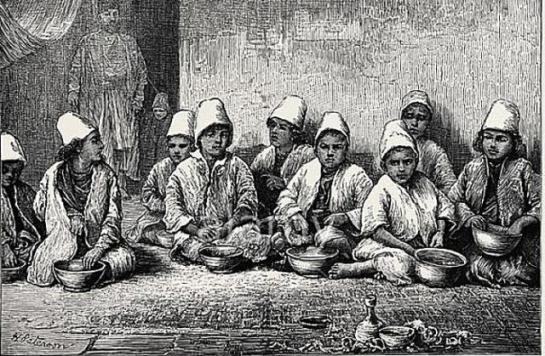
 My Virginia Beach City Public School class was full as usual. There were 36 kids fresh from the weekend with little interest in academia. I stood and listened to their idle conversations that played like spindrift on an ocean beach. Just as I was about to get them quiet and started on the fundamentals of the Legislative Branch, a school guidance teacher knocked on my door. Oh great, I thought, another interruption. Standing beside her was a smallish boy with troubled, battle-hardened eyes. I learned that he was fresh from the inner city of Chicago where he had witnessed the brutal murder of several of his family members. As I listened to the counselor whisper to me a litany of horrors that overshadowed this little 8th grader, I wondered how such cruelties could befall one so young. Eventually, his guardian left, and I ushered the boy to his seat. He was so far behind. I didn’t know where to start. He didn’t know his password. He couldn’t open his computer. He glared at me. And another day of teaching began…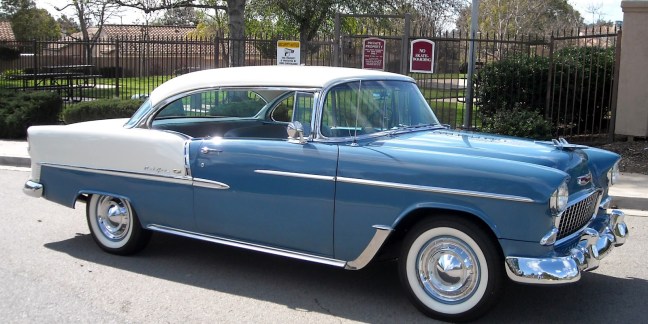



 Blak tie press